

Hierarchy Level
What It Does
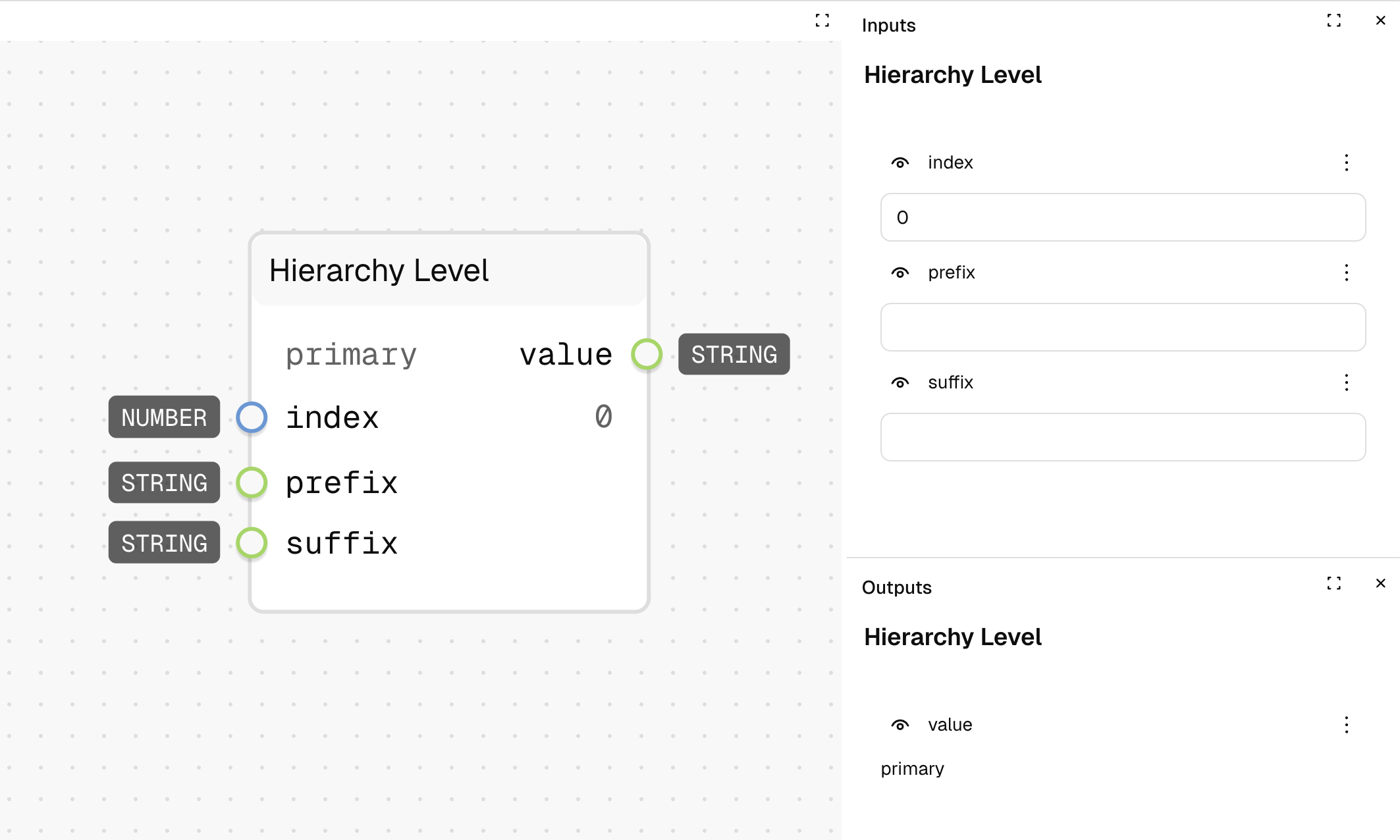
The Hierarchy Level node generates hierarchical level names (primary, secondary, tertiary, etc.) based on an index value. It provides semantic naming for items in a hierarchical structure.
Inputs
| Name | Description | Type | Required |
|---|---|---|---|
| Index | Level index (0 = primary, 1 = secondary, etc.) | Number | Yes |
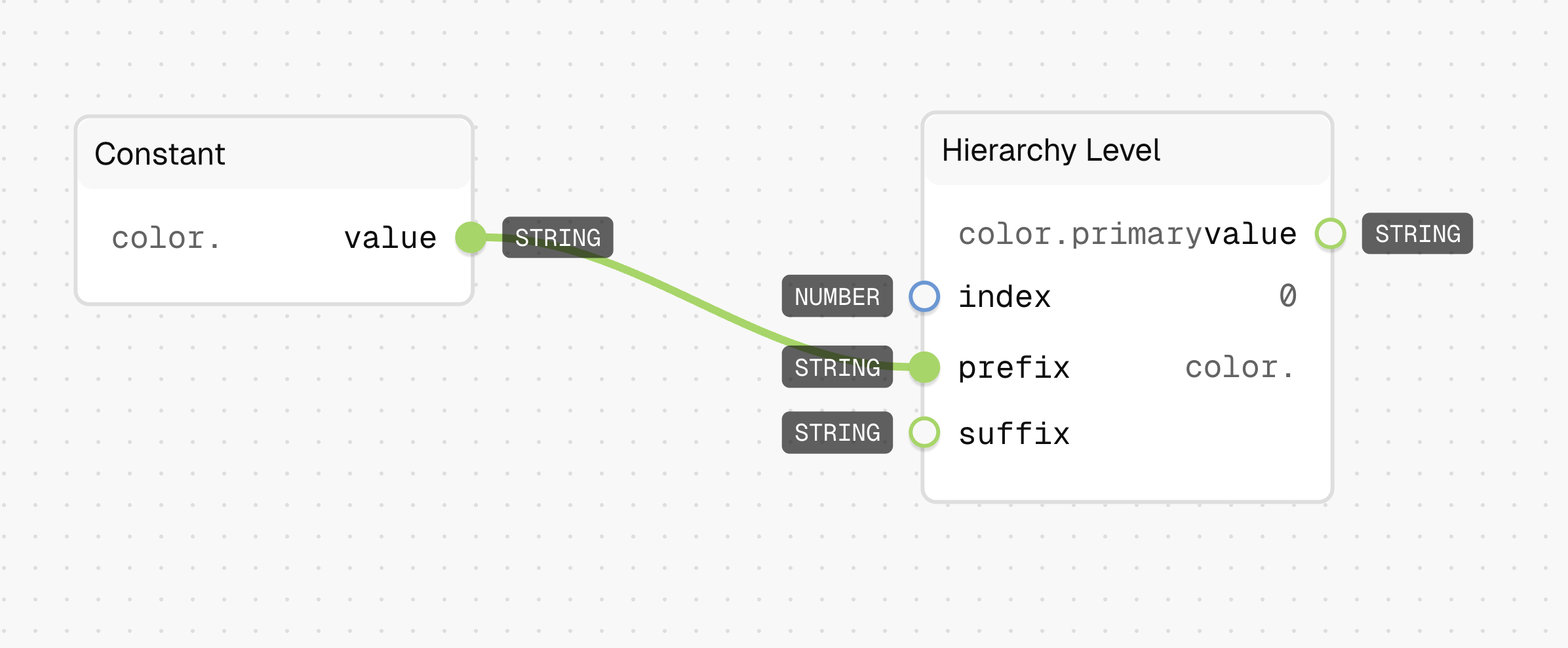
| Prefix | Optional text to add before the level name | String | No |
| Suffix | Optional text to add after the level name | String | No |
Outputs
| Name | Description | Type |
|---|---|---|
| Value | The generated hierarchy level name with optional prefix and suffix | String |
How to Use It
- Drag the Hierarchy Level node into your graph.
- Connect a number to the "Index" input or set it directly (0-9).
- Optionally add prefix and suffix text if needed.
- The node will output the corresponding hierarchy level name (like "primary", "secondary", "tertiary").
Tips
- The index is clamped between 0-9, supporting up to 10 hierarchy levels.
- Use these semantic names instead of numbers when creating hierarchical design systems.
See Also
- T-shirt Size: For generating scale-based naming (XS, S, M, L, XL).
- Numeric Scale: For generating numeric sequences.
Use Cases
- Button Hierarchy: Define semantic levels for buttons (primary, secondary, tertiary).
- Typography System: Create named heading levels beyond h1-h6 nomenclature.
- Color Importance: Define a semantic color system based on hierarchical importance.