

Flatten Alpha
What It Does
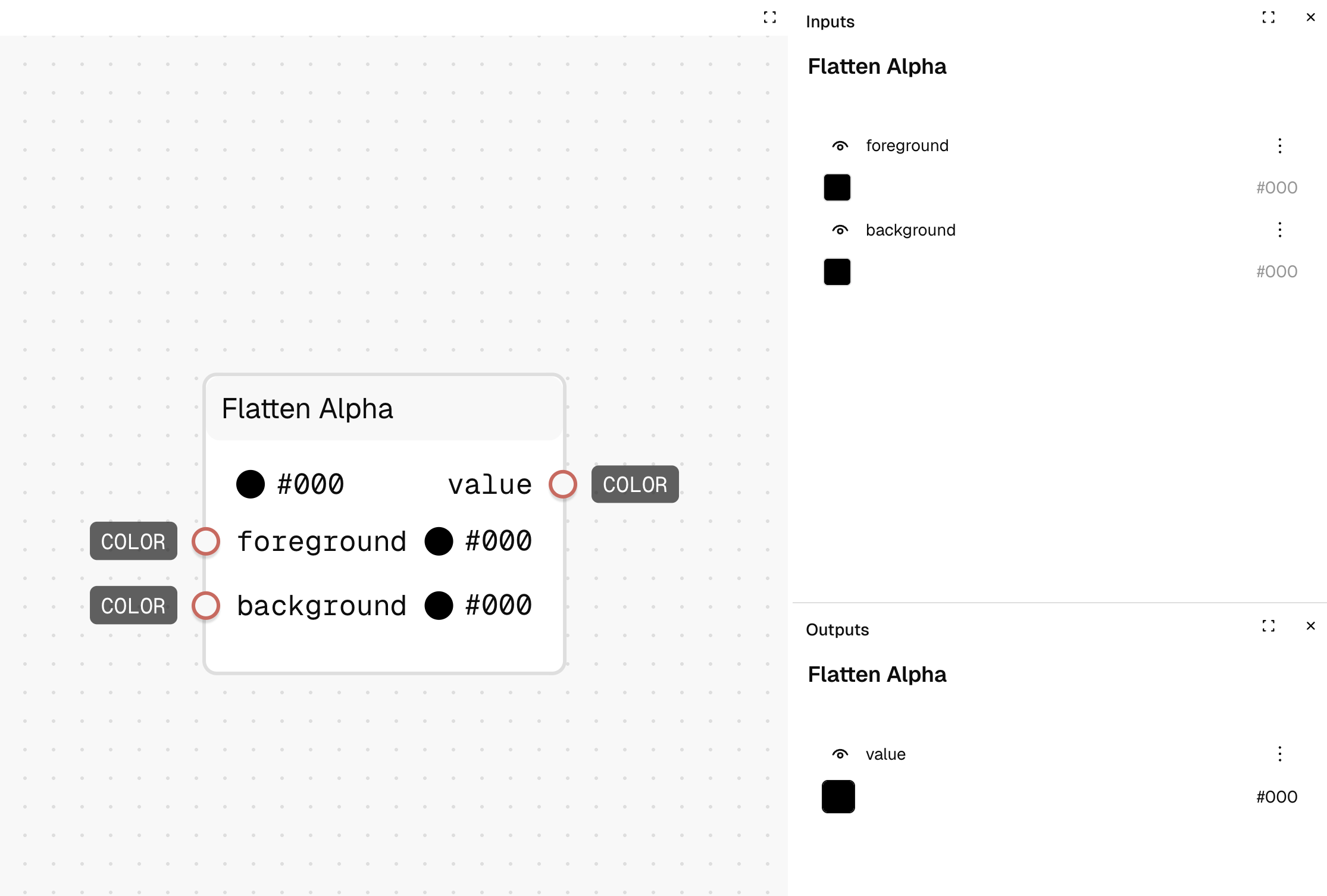
The Flatten Alpha node blends a transparent foreground color with a solid background color to create a single opaque color. It calculates how the colors would appear when layered and removes transparency.
Inputs
| Name | Description | Type | Required |
|---|---|---|---|
| Foreground | The (potentially transparent) color to blend on top | Color | Yes |
| Background | The solid background color to blend with | Color | Yes |
Outputs
| Name | Description | Type |
|---|---|---|
| Value | The resulting opaque color after blending | Color |
How to Use It
- Drag the Flatten Alpha node into your graph.
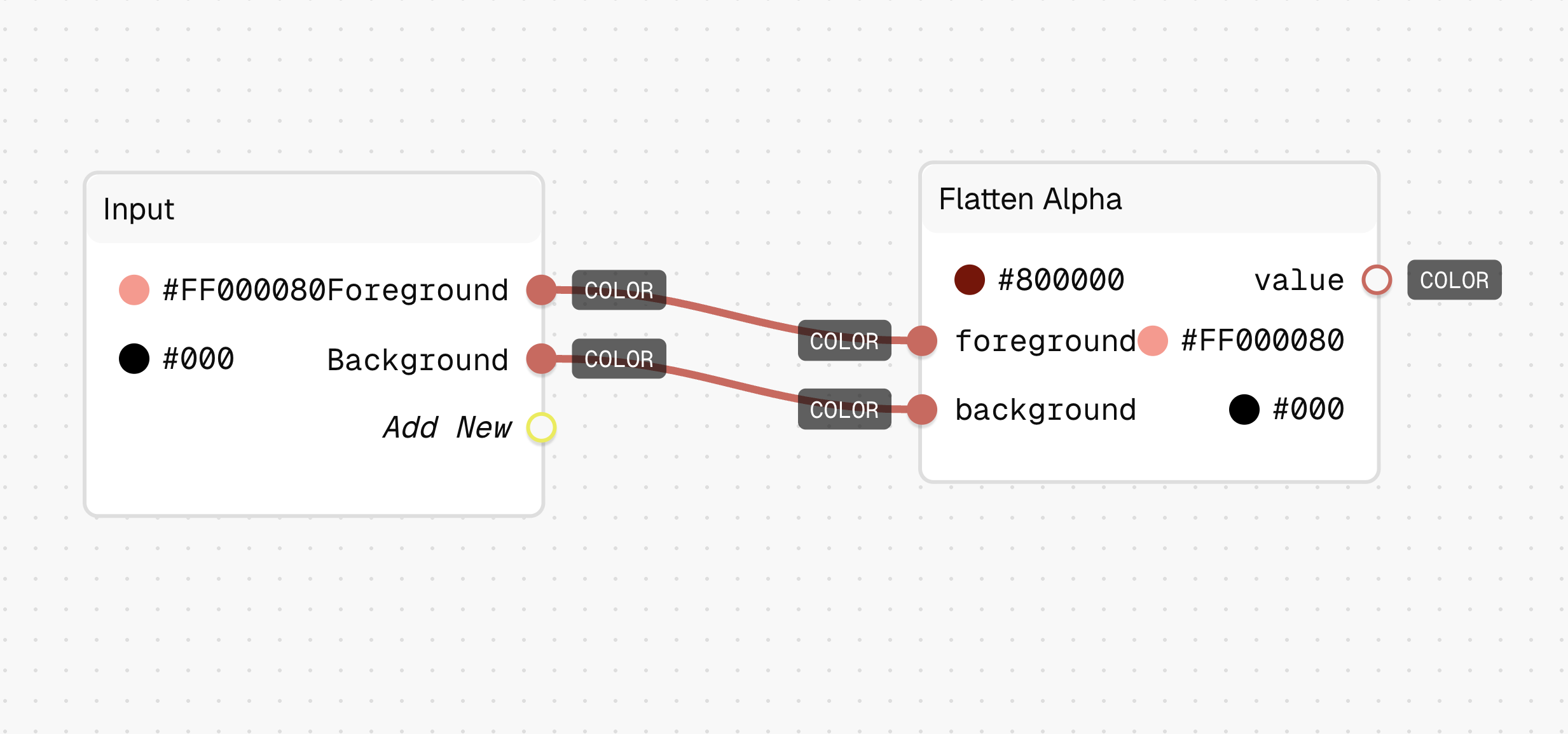
- Connect a color with transparency to the "Foreground" input (e.g.,
#FF000080). - Connect a solid color to the "Background" input (e.g.,
#000). - The output will be an opaque color representing the visual appearance of the two blended colors (
#800000).
Tips
- This node is useful for converting transparent colors to formats that don't support alpha channels.
- The background color should be fully opaque for accurate results.
See Also
- Mix Colors: For blending colors with control over the mixing percentage.
- Color to String: For converting the resulting color to a specific format.
Use Cases
- Format Conversion: Convert RGBA colors to HEX for systems that don't support transparency.
- Color Export: Prepare colors with transparency for use in older design tools.
- Visual Simulation: Preview how transparent colors will appear against a specific background.