

Panic
What It Does
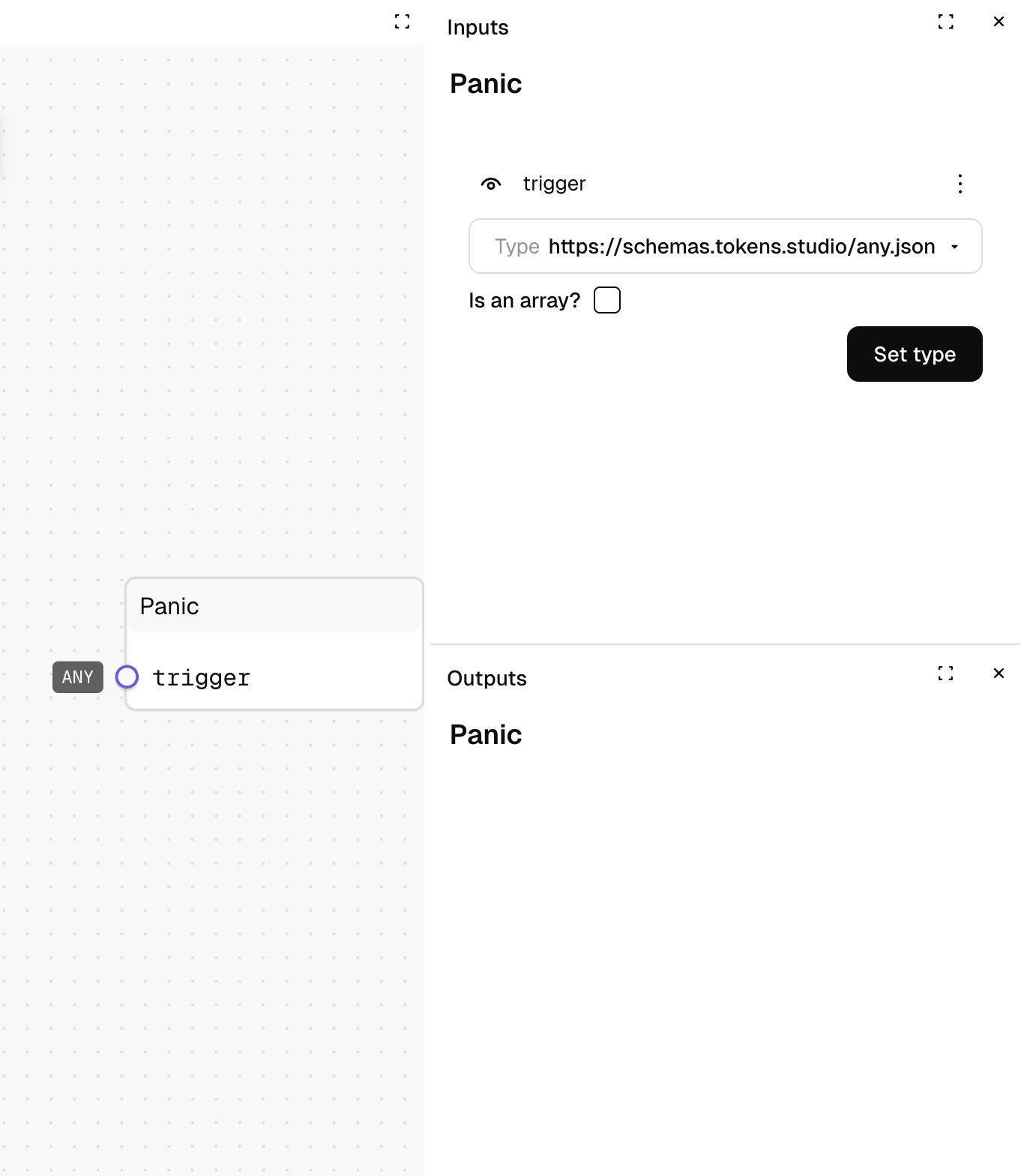
Throws an error and stops the graph execution when triggered by any truthy value. This acts as a deliberate fail-state for validation or testing purposes.
Inputs
| Name | Description | Type | Required |
|---|---|---|---|
| trigger | Value that triggers the error if true | Any | Yes |
Outputs
| Name | Description | Type |
|---|---|---|
| (none) |
How to Use It
- Drag the Panic node into your graph.
- Connect the output of another node (like a condition or comparison) to the "trigger" input.
- When the connected value is truthy (true, non-zero number, non-empty string, etc.), the graph will halt with an error.
- Use this for input validation or to stop execution under specific conditions.
Tips
- Combine with comparison nodes to create validation checks for your graph inputs.
- The error message will include the value that triggered the panic for easier debugging.
See Also
- If: For conditional execution without stopping the graph.
- Compare: For comparing values before connecting to Panic.
Use Cases
- Input Validation: Halt the graph if invalid design token values are detected.
- Range Checking: Ensure color values or numerical inputs stay within acceptable bounds.
- Debug Testing: Deliberately trigger errors during development to test error handling.