

Sort Array
What It Does
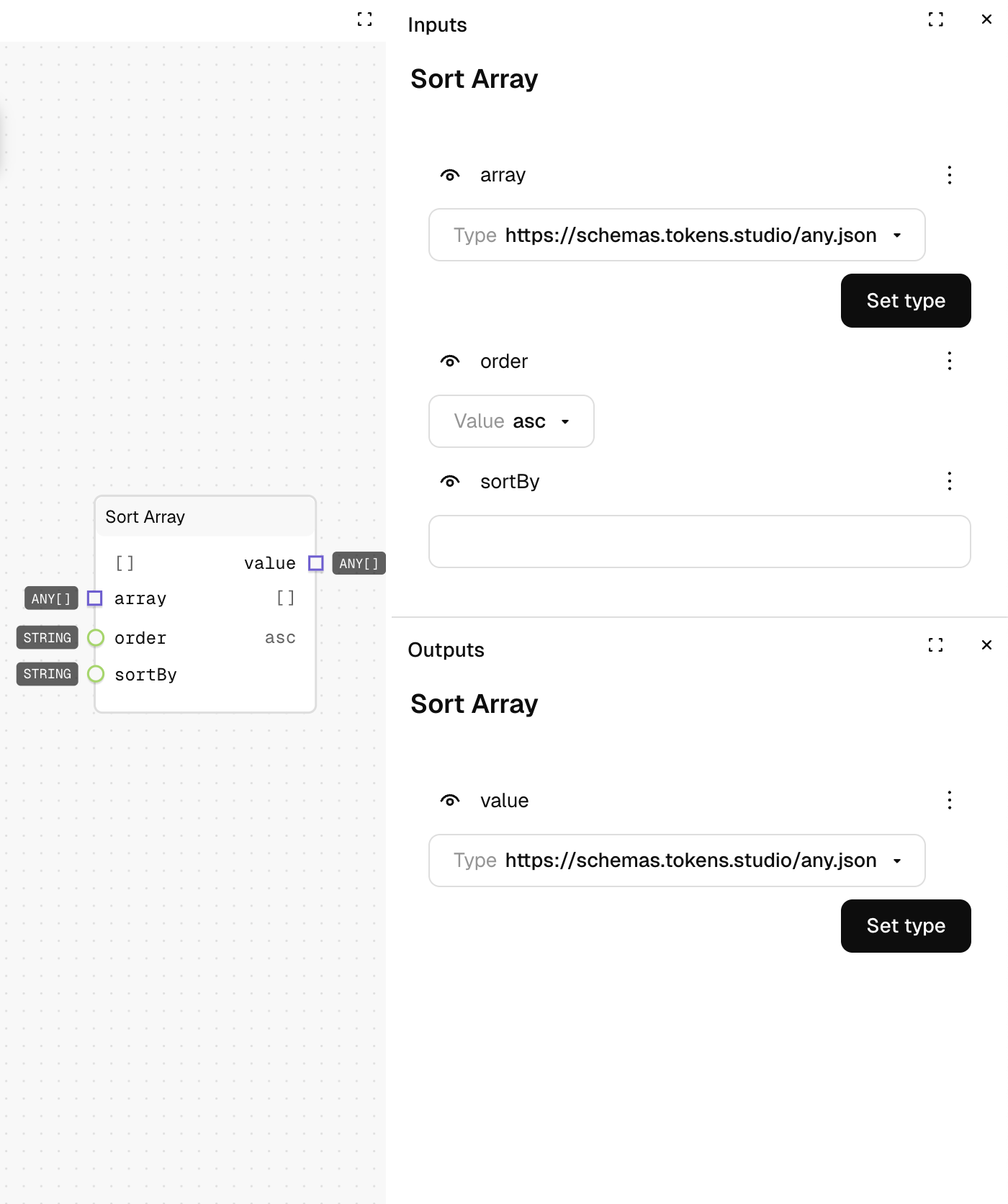
Arranges items in a list in a specific order, either ascending or descending. It can sort by a specific property for complex objects, helping to organize collections.
Inputs
| Name | Description | Type | Required |
|---|---|---|---|
| array | The list to be sorted | List | Yes |
| order | Direction of sort ("asc" or "desc") | Text | No |
| sortBy | Property name to sort by (for object elements) | Text | Yes |
Outputs
| Name | Description | Type |
|---|---|---|
| value | The sorted list | List |
How to Use It
- Drag the Sort Array node into your graph.
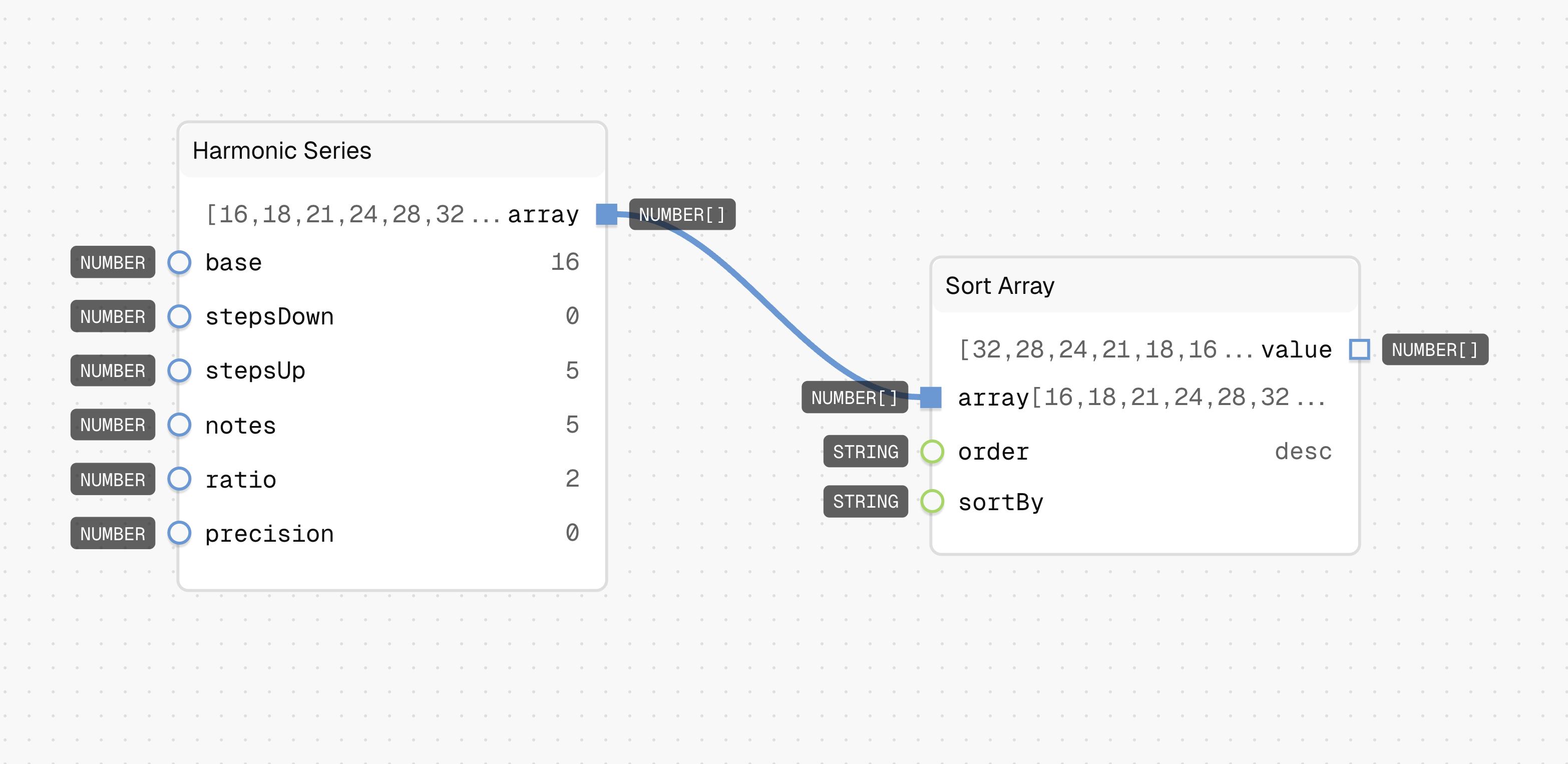
- Connect your list (like
[16, 18, 21, 24, 28, 32]) to the "array" input. - Set "sortBy" to the property to sort on (e.g., "value").
- Optionally change "order" to "desc" for descending order (default is "asc").
Tips
- For simple lists (numbers or strings), use an empty string for the "sortBy" value.
- The sort is stable, meaning equal items maintain their relative order.
See Also
- Reverse Array: For simply flipping the order of items without sorting.
- Array Filter: For selecting items rather than reordering them.
Use Cases
- Color Organization: Sort colors by brightness, hue, or other properties.
- Token Prioritization: Arrange design tokens by their importance or frequency of use.
- Size Sequencing: Order spacing or sizing tokens from smallest to largest for consistent scales.