

Object Merge
What It Does
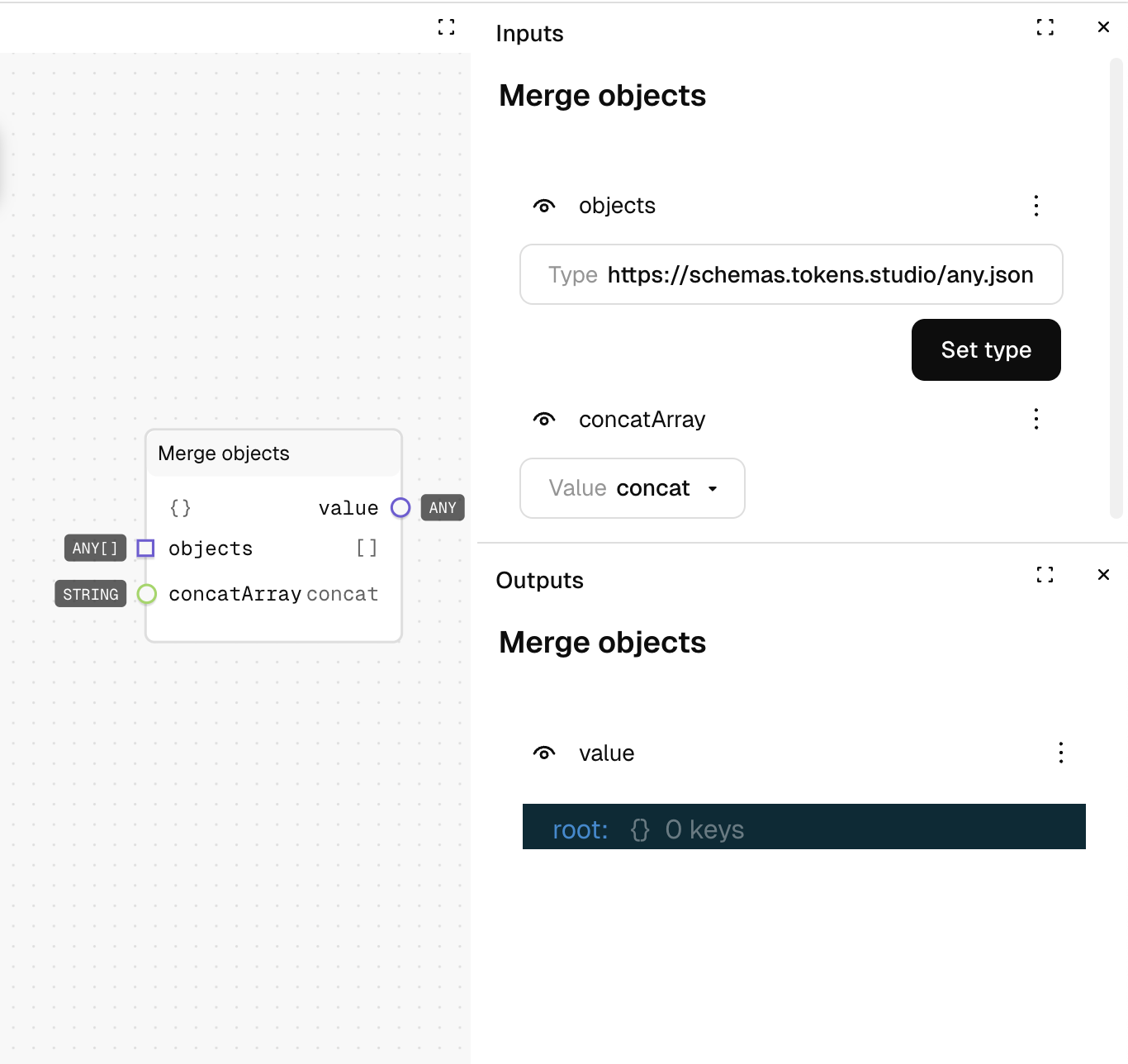
The Merge objects node combines multiple objects into a single object. It's perfect for consolidating data from different sources, with later objects in the array overriding properties from earlier ones in case of conflicts.
Inputs
| Name | Description | Type | Required |
|---|---|---|---|
| Objects | An array of objects to merge together | List | No |
| Concat Array | How arrays should be merged: "concat" (join arrays), "merge" (replace arrays), or "combine" (smart merge) | Text | No |
Outputs
| Name | Description | Type |
|---|---|---|
| Value | The resulting merged object | Any |
How to Use It
- Drag the Merge objects node into your graph.
- Connect an array of objects to the "Objects" input.
- Select how you want arrays handled using the "Concat Array" input (defaults to "concat").
- Run the graph to get a single merged object that combines all properties.
Tips
- Objects later in the array will override properties from earlier objects when there are conflicts.
- Choose "concat" to join arrays, "merge" to replace them, or "combine" for a more intelligent merge.
See Also
- Objectify: For creating an object from key-value pairs.
- Object Property: For accessing specific properties of an object.
Use Cases
- Token Combining: Merge base tokens with theme-specific overrides to create a complete token set.
- Configuration Building: Combine default settings with user preferences to create a final configuration.
- Data Aggregation: Merge data objects from multiple sources into a single comprehensive object.