

Random
What It Does
The Random node generates a random decimal number between 0 (inclusive) and 1 (exclusive). It's useful for creating variability, randomized designs, and simulating unpredictable behaviors.
Inputs
| Name | Description | Type | Required |
|---|---|---|---|
| None | This node has no inputs | N/A | N/A |
Outputs
| Name | Description | Type |
|---|---|---|
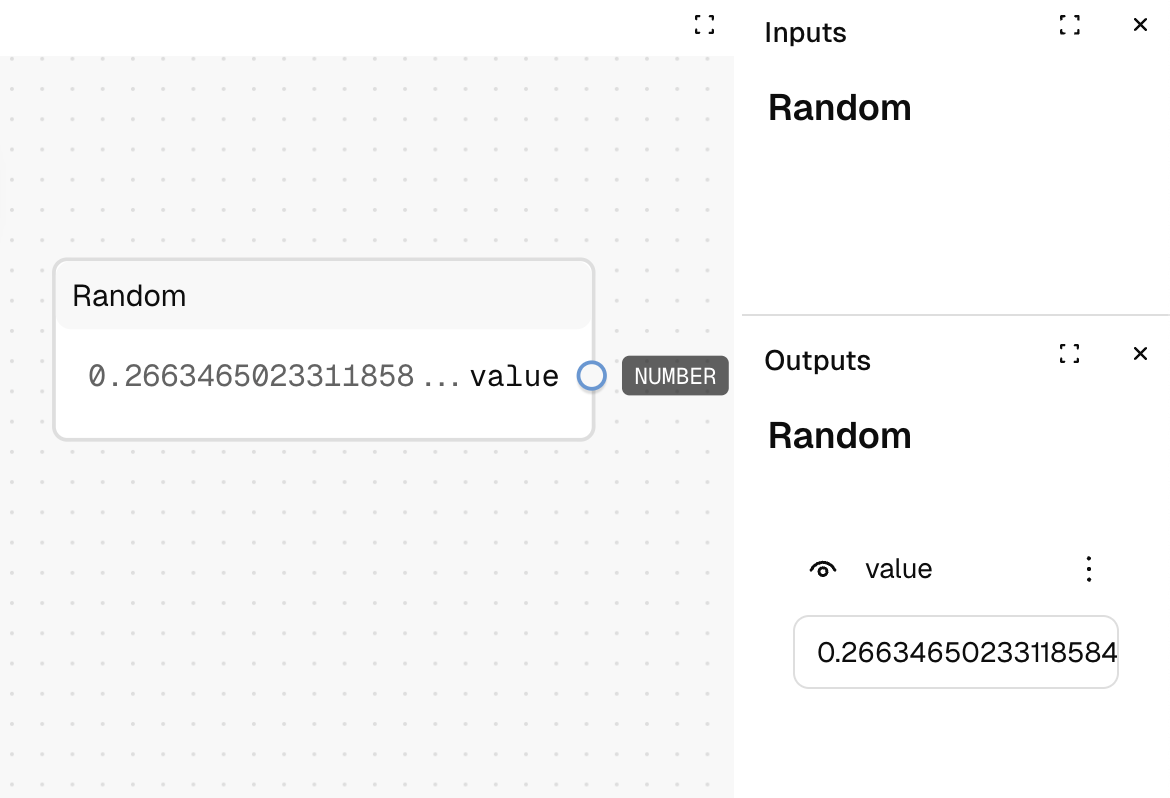
| Value | A random number between 0 and 1 | Number |
How to Use It
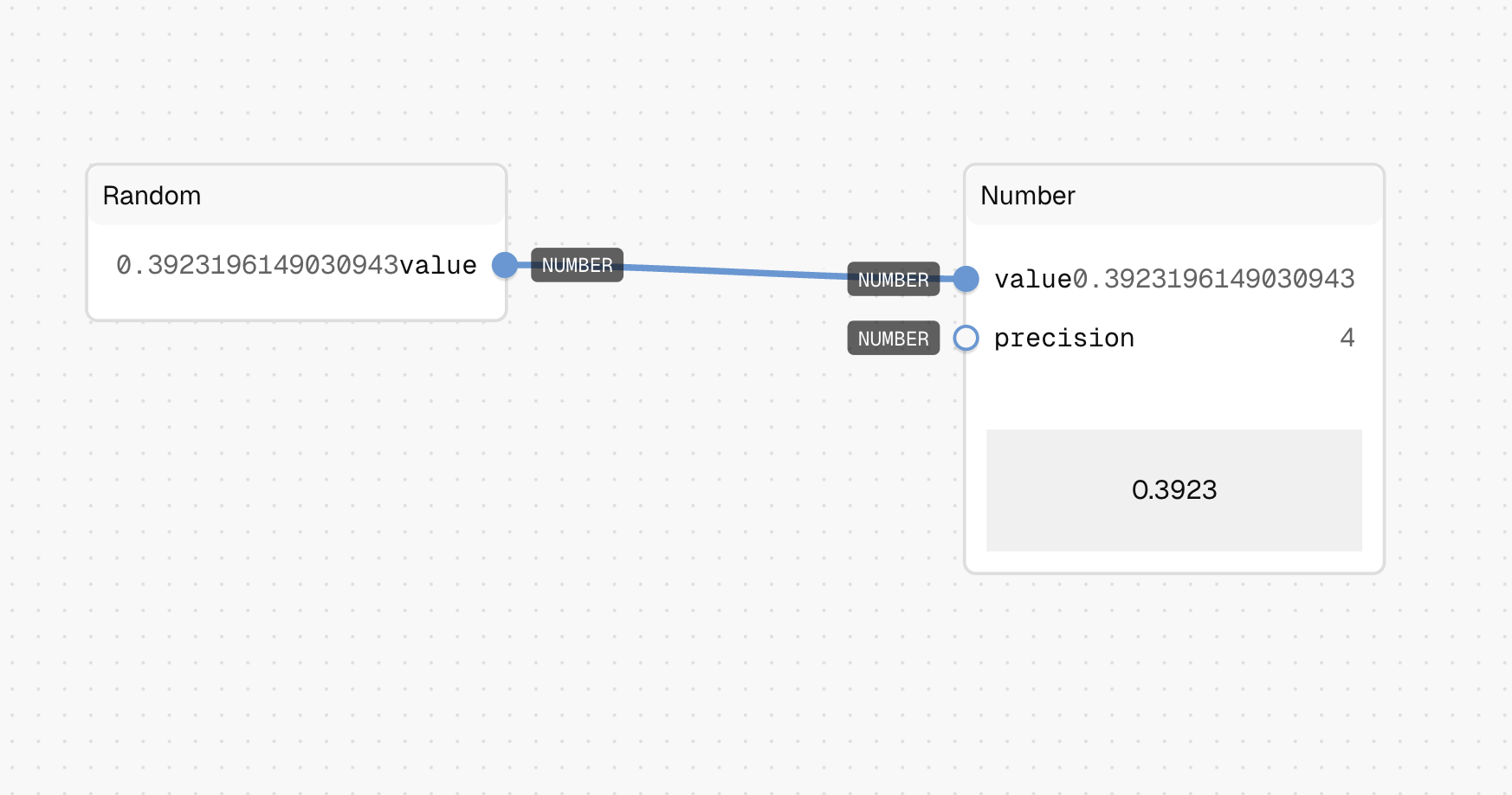
- Drag the Random node into your graph.
- The node generates a random value when it's first created.
- Connect the "Value" output to other nodes that need randomization.
- Note that the value stays fixed after generation and doesn't change during execution.
Tips
- To get a random range other than 0-1, use math nodes to scale and shift the output.
- For values like 0-100, multiply the random value by 100.
- For ranges like 20-50, multiply by 30 (the range) and add 20 (the minimum).
See Also
- Range Mapping: For mapping the 0-1 output to other ranges.
- Multiply: For scaling the random value.
Use Cases
- Variation in Design: Add controlled randomness to spacing, sizing, or colors.
- Testing Edge Cases: Simulate different possible values during system testing.
- Jitter Effects: Add natural-looking variation to regular patterns or layouts.