

Passthrough
What It Does
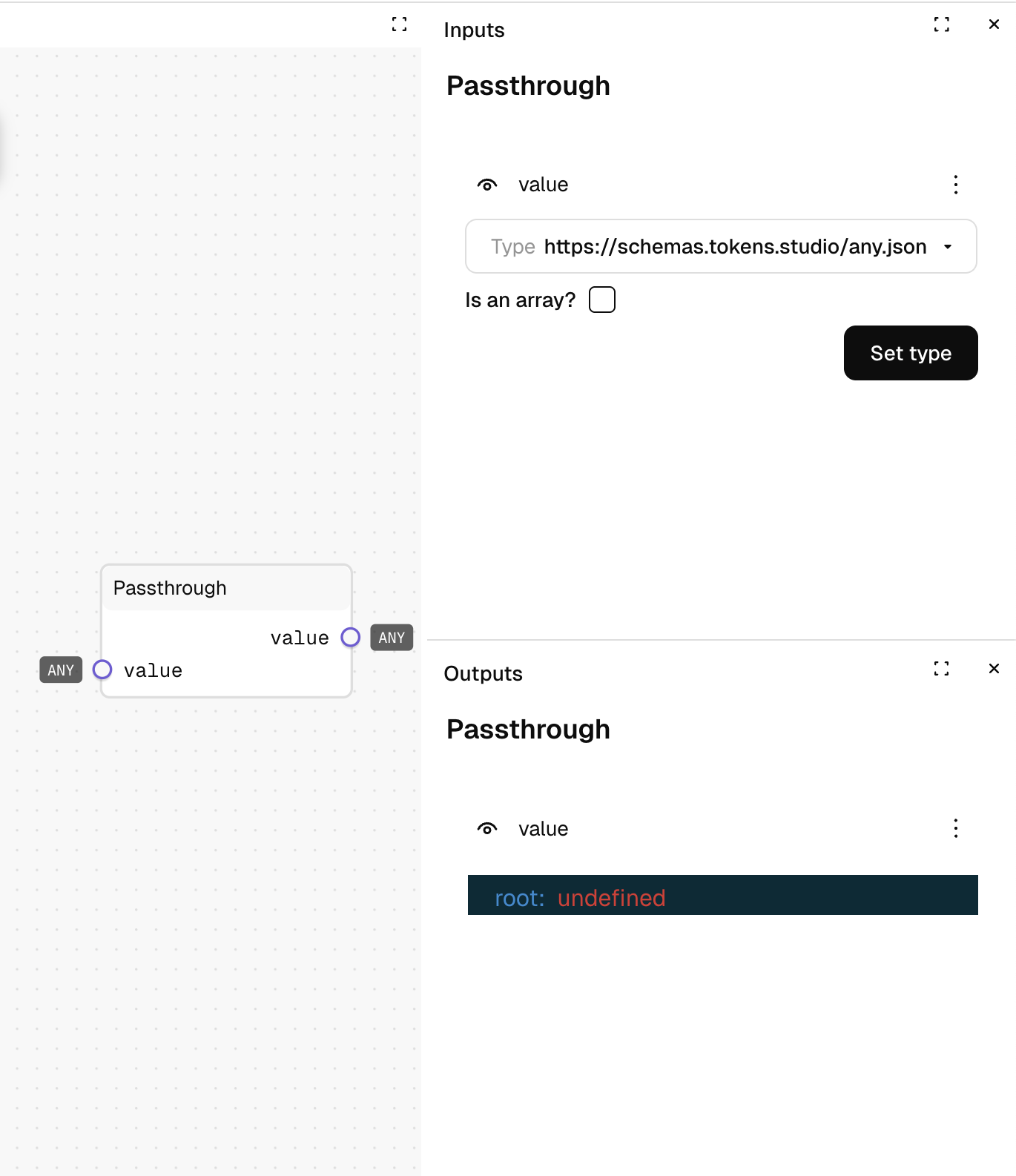
Passes a value directly from input to output without modifying it. This is useful for reorganizing graph connections or making temporary connections during development.
Inputs
| Name | Description | Type | Required |
|---|---|---|---|
| value | The value to pass through | Any | Yes |
Outputs
| Name | Description | Type |
|---|---|---|
| value | The same value as the input | Any |
How to Use It
- Drag the Passthrough node into your graph.
- Connect any value to the "value" input.
- Connect the "value" output to any node that should receive the original value.
- The node will simply pass the value through without changing it.
Tips
- Use Passthrough nodes to clean up complicated graph layouts by redirecting connections.
- The node preserves the exact type of data passed through it, making it work with any value type.
See Also
- Note: For adding comments to your graph without affecting data flow.
- Objectify: For combining multiple values into an object structure.
Use Cases
- Graph Organization: Improve the readability of complex graphs by rerouting connections.
- Debugging: Insert between connections to create inspection points during development.
- Interface Planning: Use as placeholders when designing node interfaces before implementation.