

Ceiling
What It Does
Rounds a number up to the nearest whole integer. This is useful for creating grid-based layouts, ensuring minimum sizes, or working with values that must be whole numbers.
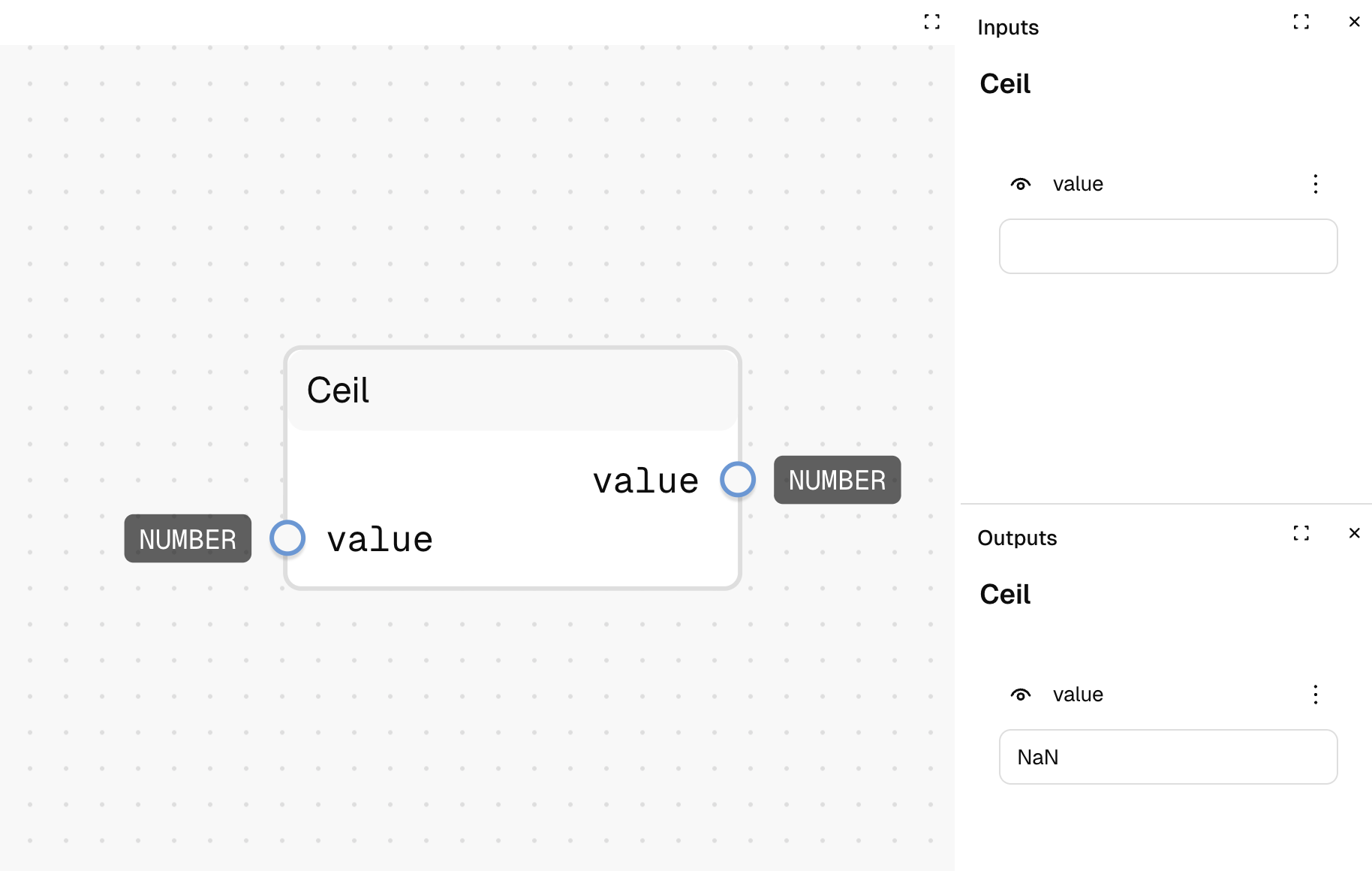
Inputs
| Name | Description | Type | Required |
|---|---|---|---|
| value | The number to round up | Number | Yes |
Outputs
| Name | Description | Type |
|---|---|---|
| value | The input number rounded up to the nearest integer | Number |
How to Use It
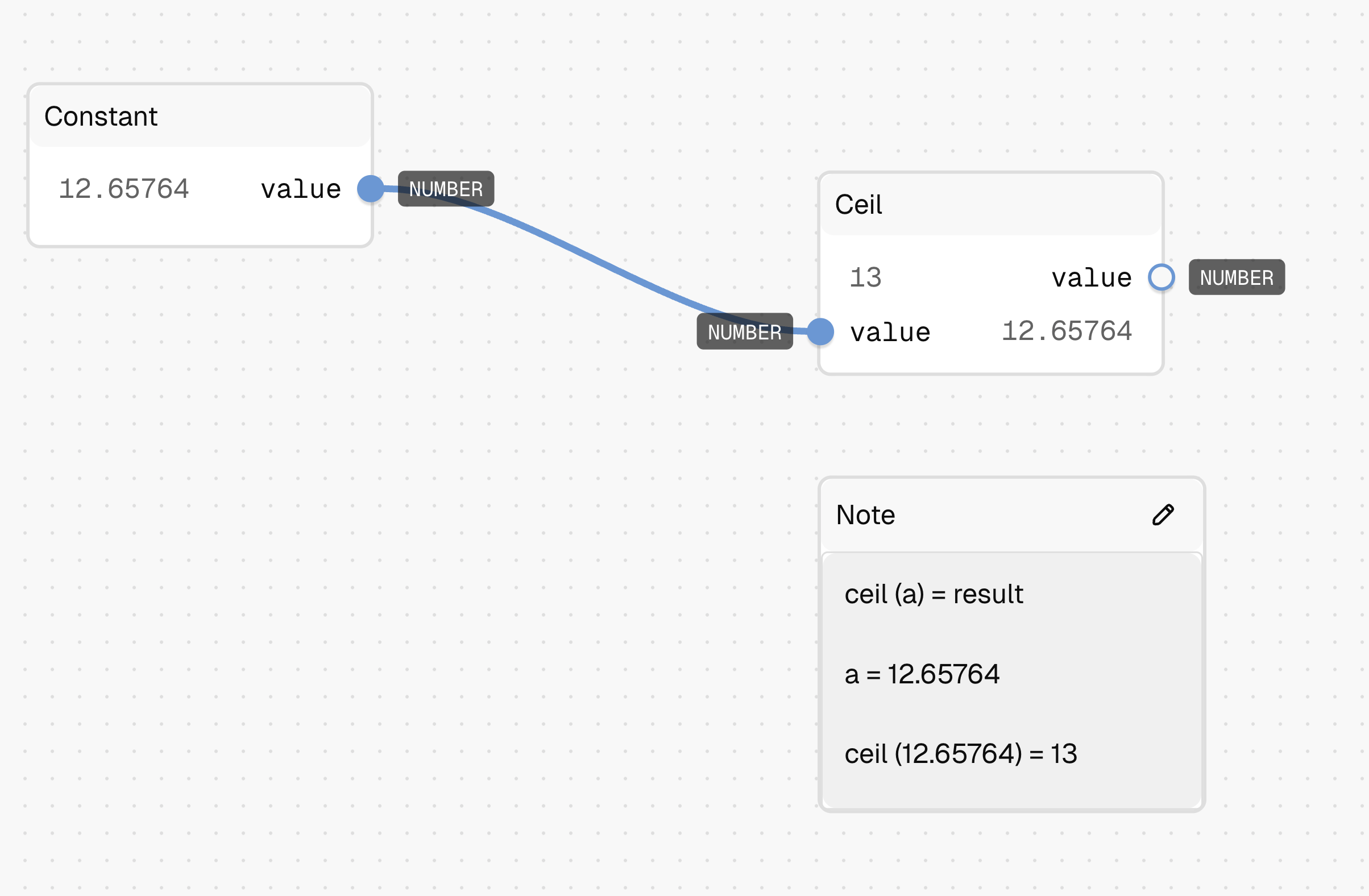
- Drag the Ceil node into your graph.
- Connect a number (like
12.65764) to the "value" input. - Run the graph—your output will be
13. - If the input is already a whole number (like
7), the output remains the same (7).
Tips
- Use ceiling when you need to ensure a minimum number of items or size (like grid columns).
- Negative numbers are also rounded upward (e.g., -4.3 becomes -4).
See Also
- Floor: For rounding down to the nearest integer.
- Round: For rounding to the nearest integer (up or down).
Use Cases
- Grid Calculations: Calculate how many grid cells are needed to fit content.
- Pagination: Determine the number of pages needed to display a set of items.
- Sizing: Ensure elements have at least a minimum pixel size, even with fractional calculations.