

Constant
What It Does
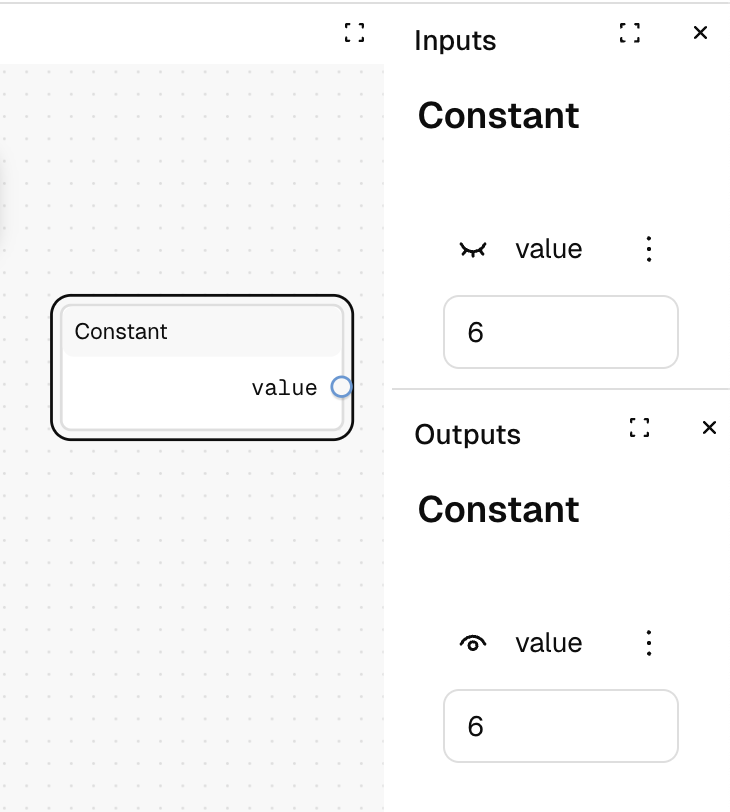
Provides a fixed value that doesn't change during graph execution. It allows you to set a single value that can be connected to multiple nodes, making it easier to maintain consistent values across your graph.
Inputs
| Name | Description | Type | Required |
|---|---|---|---|
| value | The value to output | Any | Yes |
Outputs
| Name | Description | Type |
|---|---|---|
| value | The constant value | Any |
How to Use It
- Drag the Constant node into your graph.
- Double-click the node or edit its properties to set the desired value.
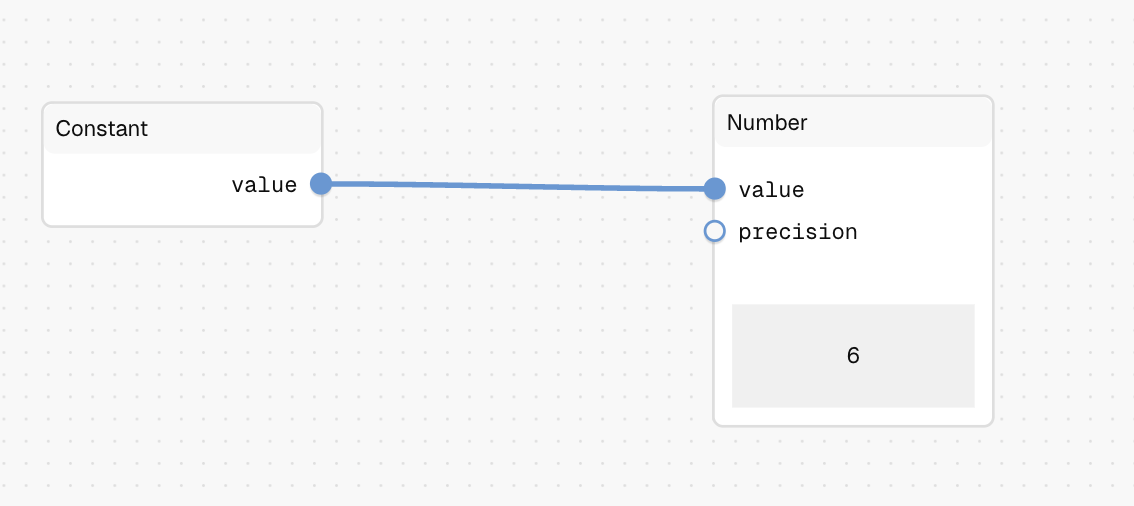
- Connect the node's output to any other nodes that need this value.
- Run the graph—the constant value will be passed to all connected nodes.
Tips
- Use Constants for values that are used in multiple places to avoid duplicating the same value.
- The Constant node can hold any type of data (text, numbers, colors, arrays, etc.).
- If you need to change a value used in multiple places, updating the Constant node will update all connections.
See Also
- Input: For values that should be configurable from outside the graph.
- Output: For exporting values from the graph.
- Note: For adding comments and documentation to your graph.
Use Cases
- Shared Values: Use a single source for values needed in multiple calculations.
- Configuration: Set design system constants like base sizes or colors.
- Default Values: Provide fallback values for optional inputs.
- Documentation: Label important values in your graph for better understanding.