

Reverse Array
What It Does
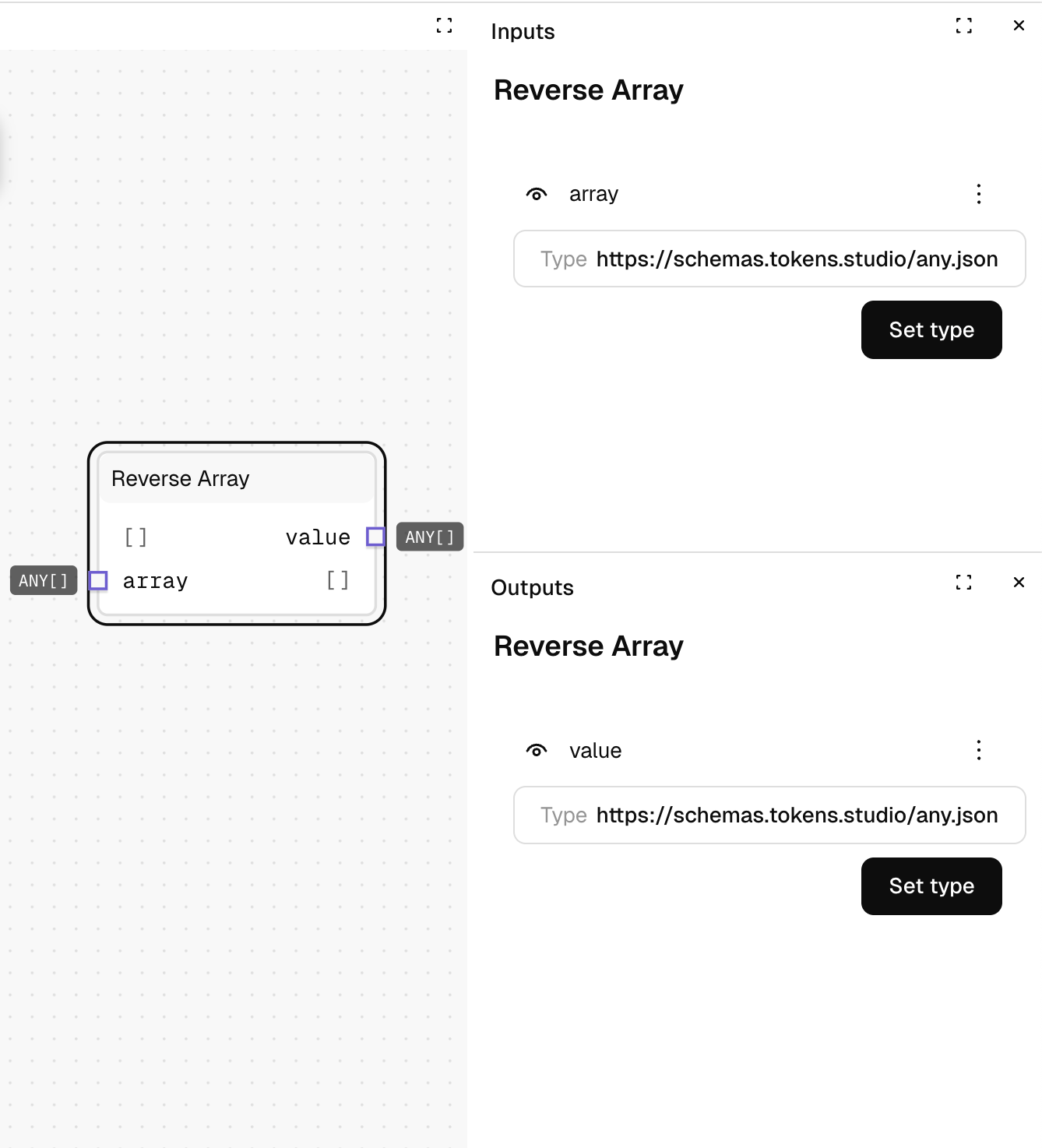
Flips the order of items in a list, making the last element first and the first element last. It creates a new reversed list without changing the original.
Inputs
| Name | Description | Type | Required |
|---|---|---|---|
| array | The list to be reversed | List | Yes |
Outputs
| Name | Description | Type |
|---|---|---|
| value | The reversed list | List |
How to Use It
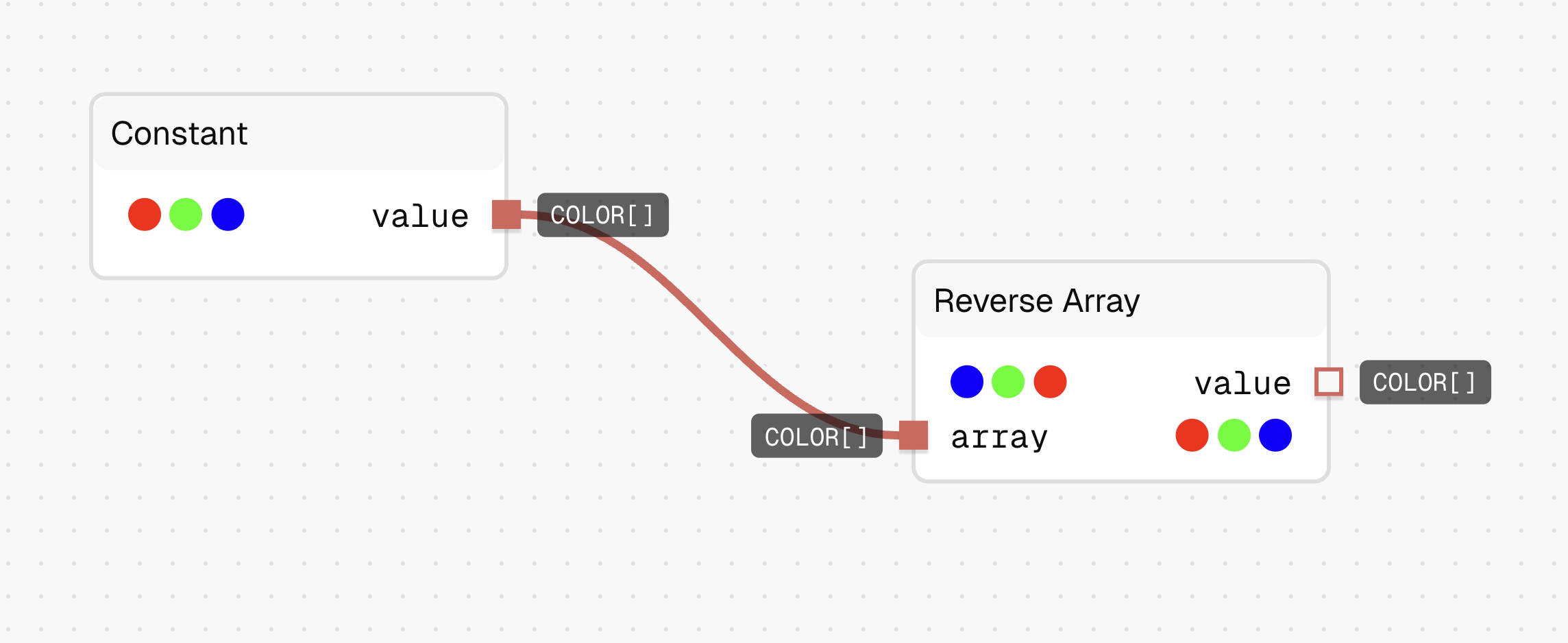
- Drag the Reverse Array node into your graph.
- Connect your list (like
[Red, Green, Blue]) to the "array" input. - The output will be the list in reverse order (e.g.,
[Blue, Green, Red]).
Tips
- This node preserves the original list and outputs a new reversed copy.
- Useful for changing the visual priority or sequence of design elements.
See Also
- Sort Array: For arranging items based on specific criteria rather than simply reversing them.
- Array Filter: For selectively including or excluding items from a list.
Use Cases
- Reversing Color Gradients: Flip a color sequence to create an opposite gradient direction.
- Priority Inversion: Transform a list sorted by importance to focus on different priorities.
- Visual Hierarchy Experimentation: Test alternative arrangements of design elements by reversing their order.