

Absolute
What It Does
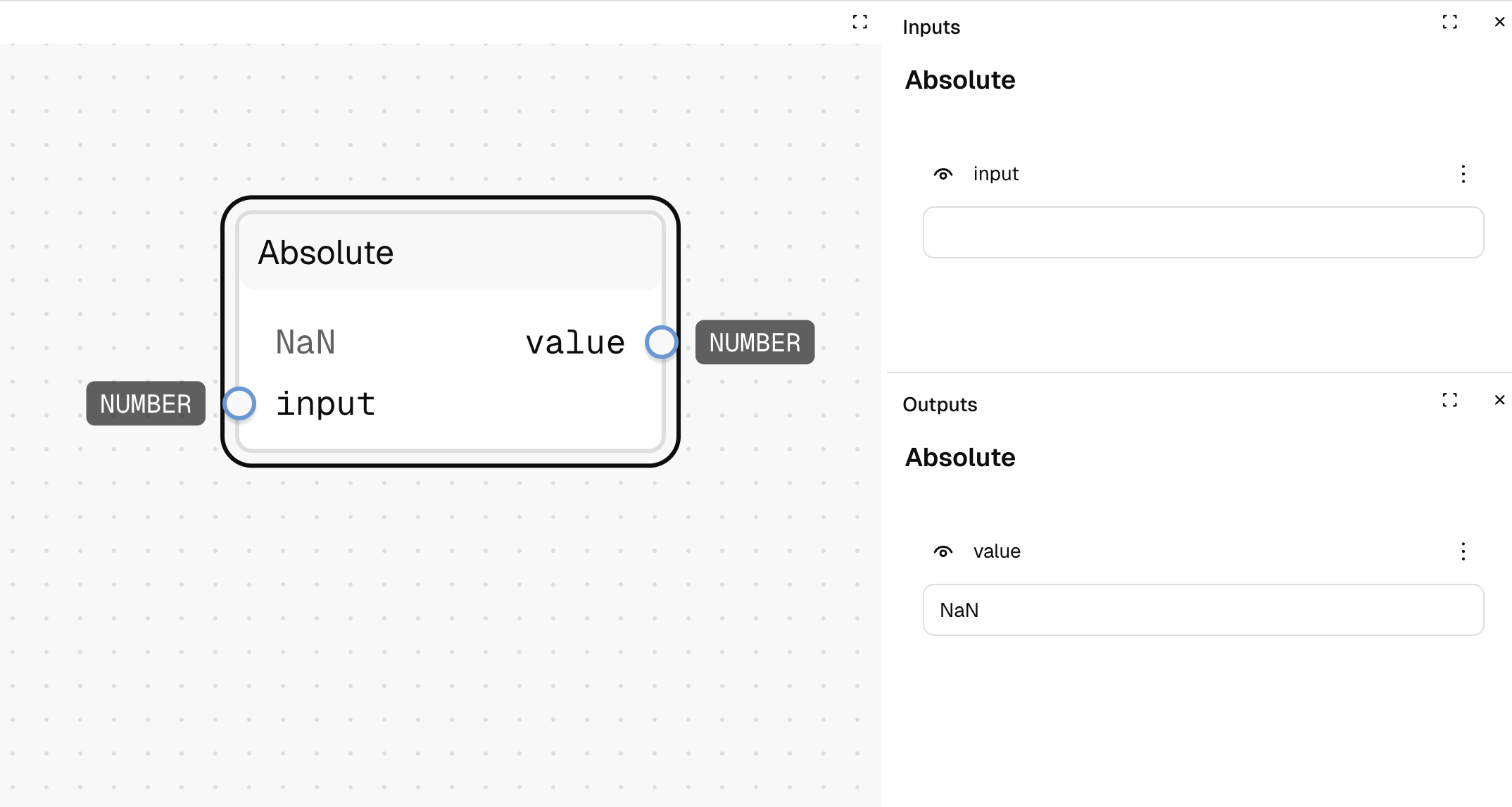
Returns the absolute (positive) value of a number by removing its sign. This is useful for calculating sizes, distances, or any values where direction doesn't matter.
Inputs
| Name | Description | Type | Required |
|---|---|---|---|
| input | The number to convert to absolute value | Number | Yes |
Outputs
| Name | Description | Type |
|---|---|---|
| value | The absolute (positive) value of the input | Number |
How to Use It
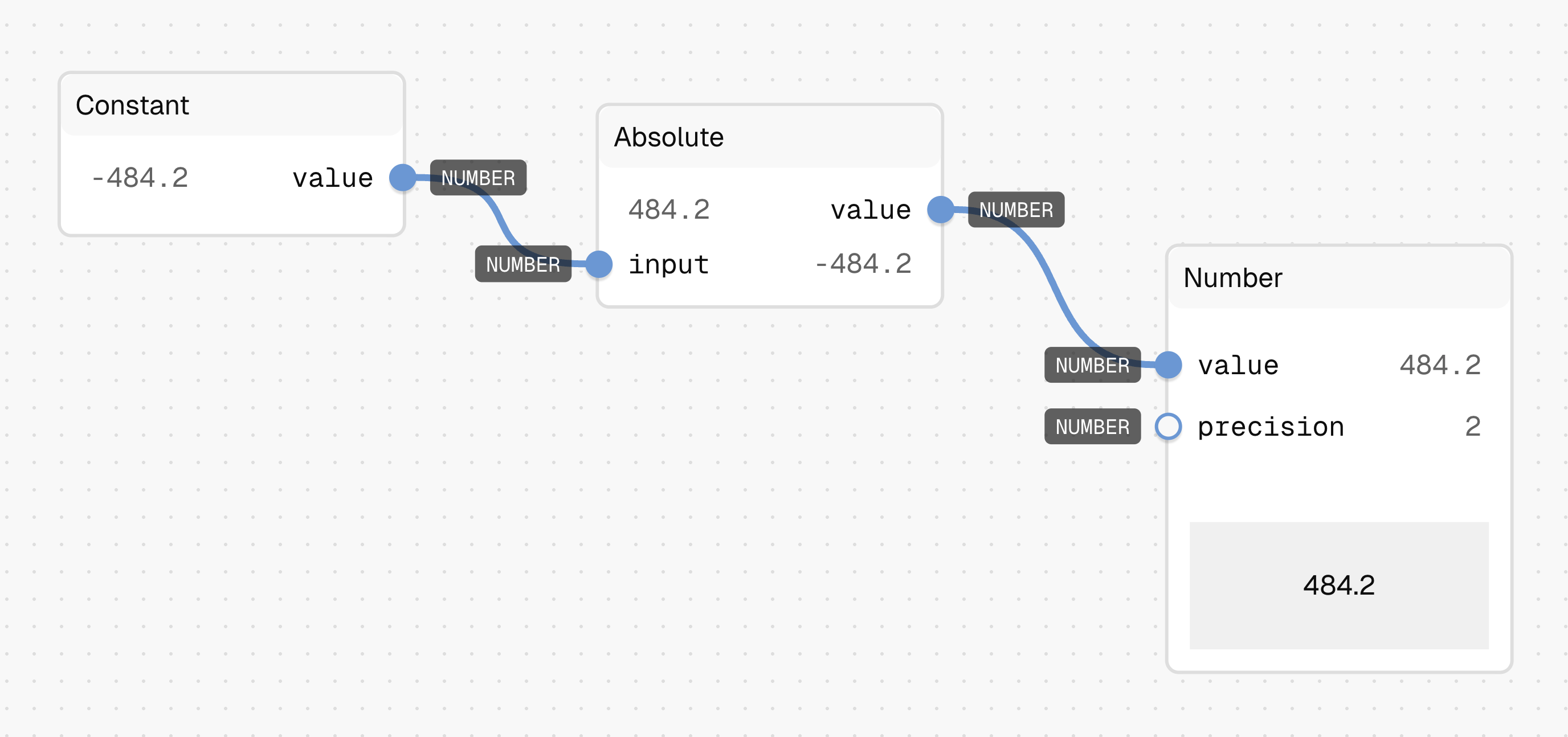
- Drag the Absolute node into your graph.
- Connect a number (like
-484.2) to the "input". - Run the graph—your output will be
484. - If you connect a positive number like
5, it remains5.
Tips
- Use this node when you need to ensure a value is positive, such as for sizes or distances.
- Absolute values are useful for calculating differences without caring about which value is larger.
See Also
- Clamp: For setting minimum and maximum bounds on a value.
- Difference: For calculating the absolute difference between two numbers.
Use Cases
- Error Calculations: Find how far a value is from a target without regard to direction.
- Asset Sizing: Ensure measurements stay positive even after calculations might result in negative values.
- Responsive Design: Calculate size differences between breakpoints regardless of which is larger.