

Subgraph
What It Does
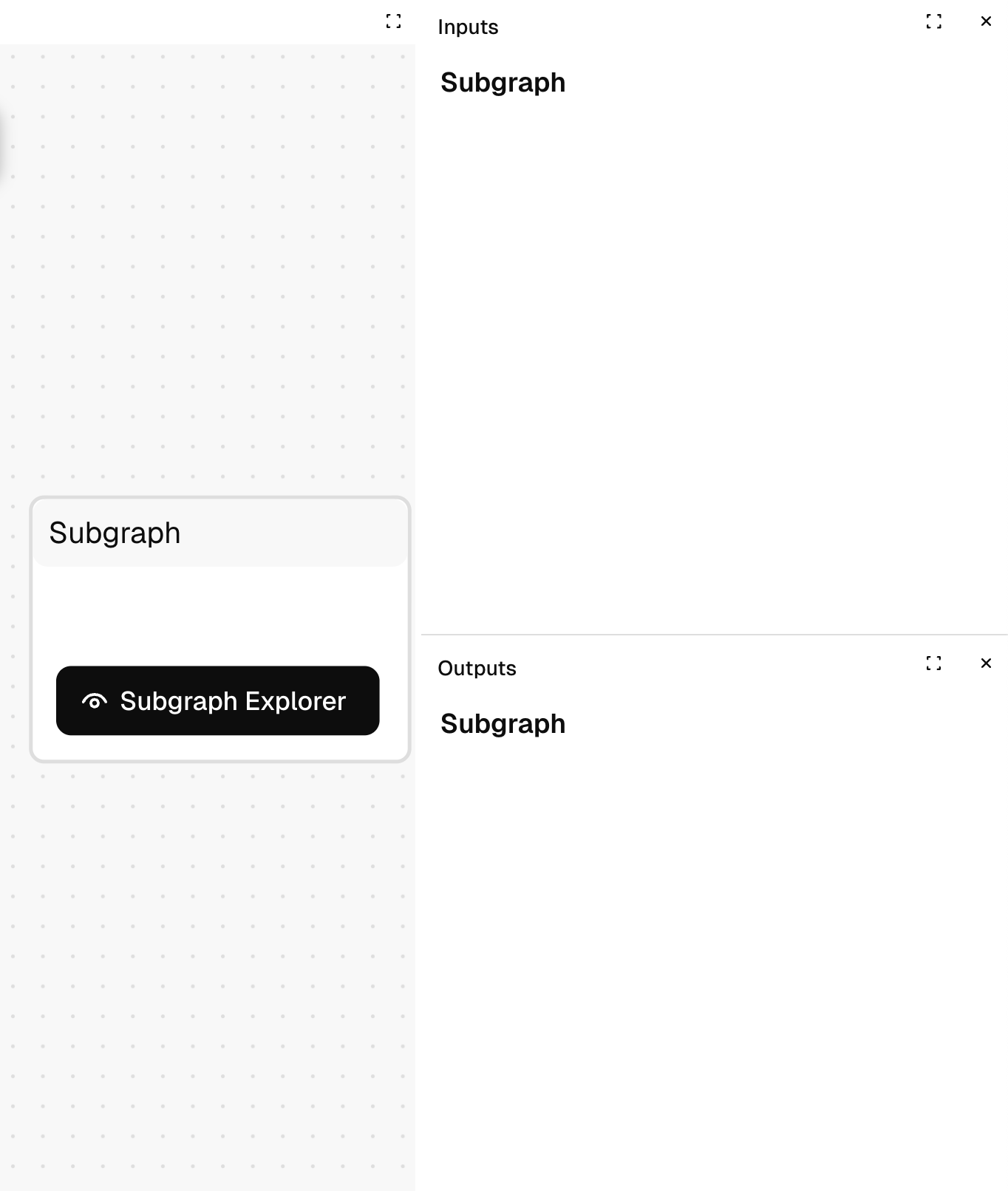
Creates a nested graph within your main graph, allowing you to encapsulate complex logic into a reusable component. It acts like a function that can contain its own internal network of nodes.
Inputs
| Name | Description | Type | Required |
|---|---|---|---|
| (dynamic) | Inputs are defined by the inner graph's Input nodes | Any | Depends on inner graph |
Outputs
| Name | Description | Type |
|---|---|---|
| (dynamic) | Outputs are defined by the inner graph's Output nodes | Any |
How to Use It
- Drag the Subgraph node into your graph.
- Double-click the node to open and edit the inner graph.
- Add Input and Output nodes within the inner graph to define the interface.
- Build your logic inside the subgraph using any other nodes.
Tips
- Keep related functionality together by grouping it in a subgraph for better organization.
- Inputs and outputs from the inner graph automatically appear on the parent subgraph node.
See Also
- Input: For defining inputs to your graph.
- Output: For defining outputs from your graph.
Use Cases
- Reusable Components: Create complex operations that can be reused across different parts of your design system.
- Logical Grouping: Organize related nodes into a single component to reduce visual complexity.
- Abstraction: Hide implementation details of complex calculations behind a simpler interface.