

Contrasting from Array
What It Does
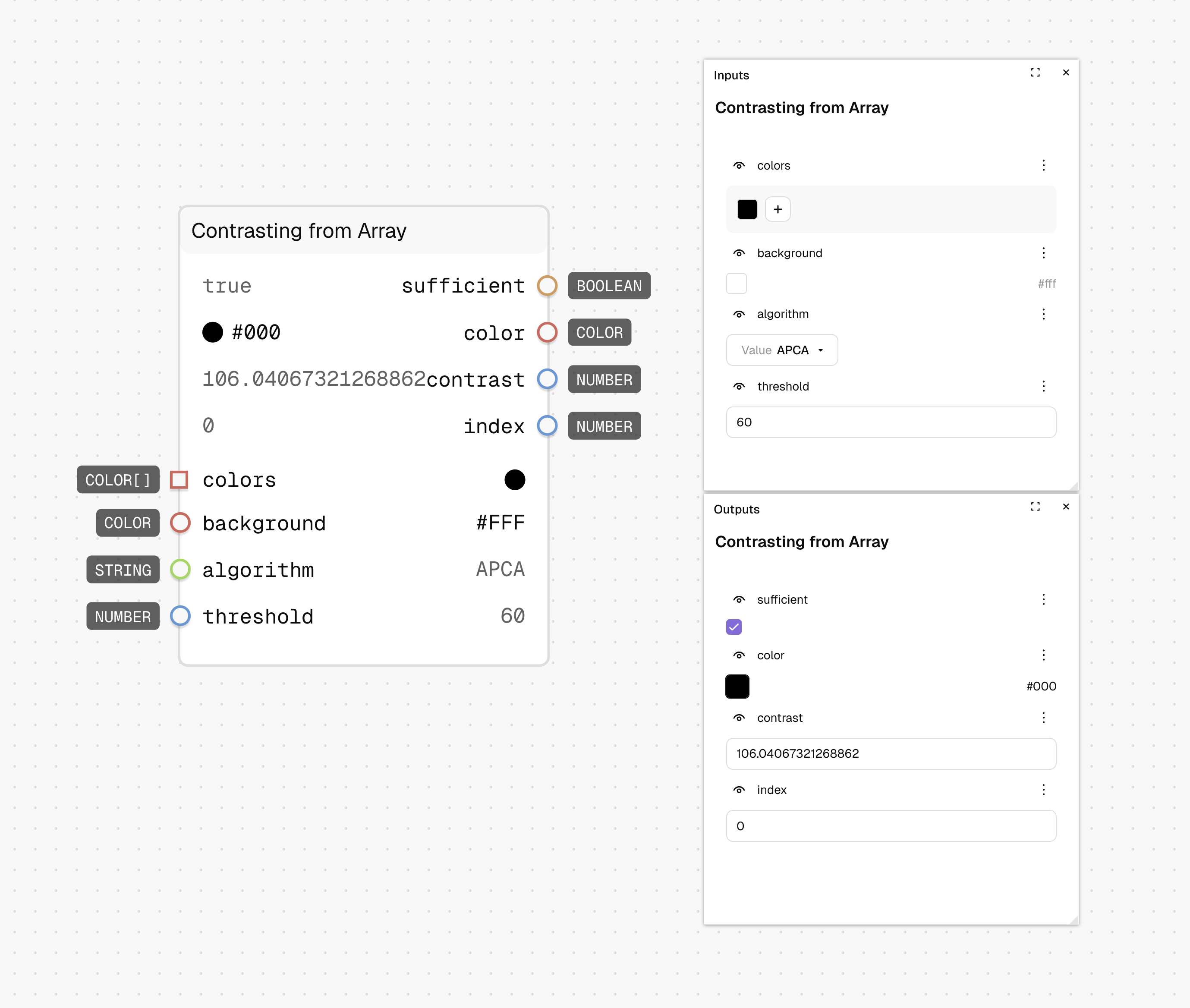
The Contrasting from Array node evaluates multiple colors against a background and returns the first one that meets a contrast threshold. If no color is sufficiently contrasting, it returns the one with the highest contrast.
Inputs
| Name | Description | Type | Required |
|---|---|---|---|
| Colors | Array of color options to evaluate | List of Colors | Yes |
| Background | The background color to test contrast against | Color | No |
| Algorithm | Contrast calculation method (APCA is default) | String | No |
| Threshold | Minimum contrast value considered sufficient (default: 60) | Number | No |
Outputs
| Name | Description | Type |
|---|---|---|
| Color | The selected color with best/sufficient contrast | Color |
| Sufficient | Whether the selected color meets the threshold | Yes/No |
| Contrast | The contrast ratio of the selected color | Number |
| Index | The position of the selected color in the original array | Number |
How to Use It
- Drag the Contrasting from Array node into your graph.
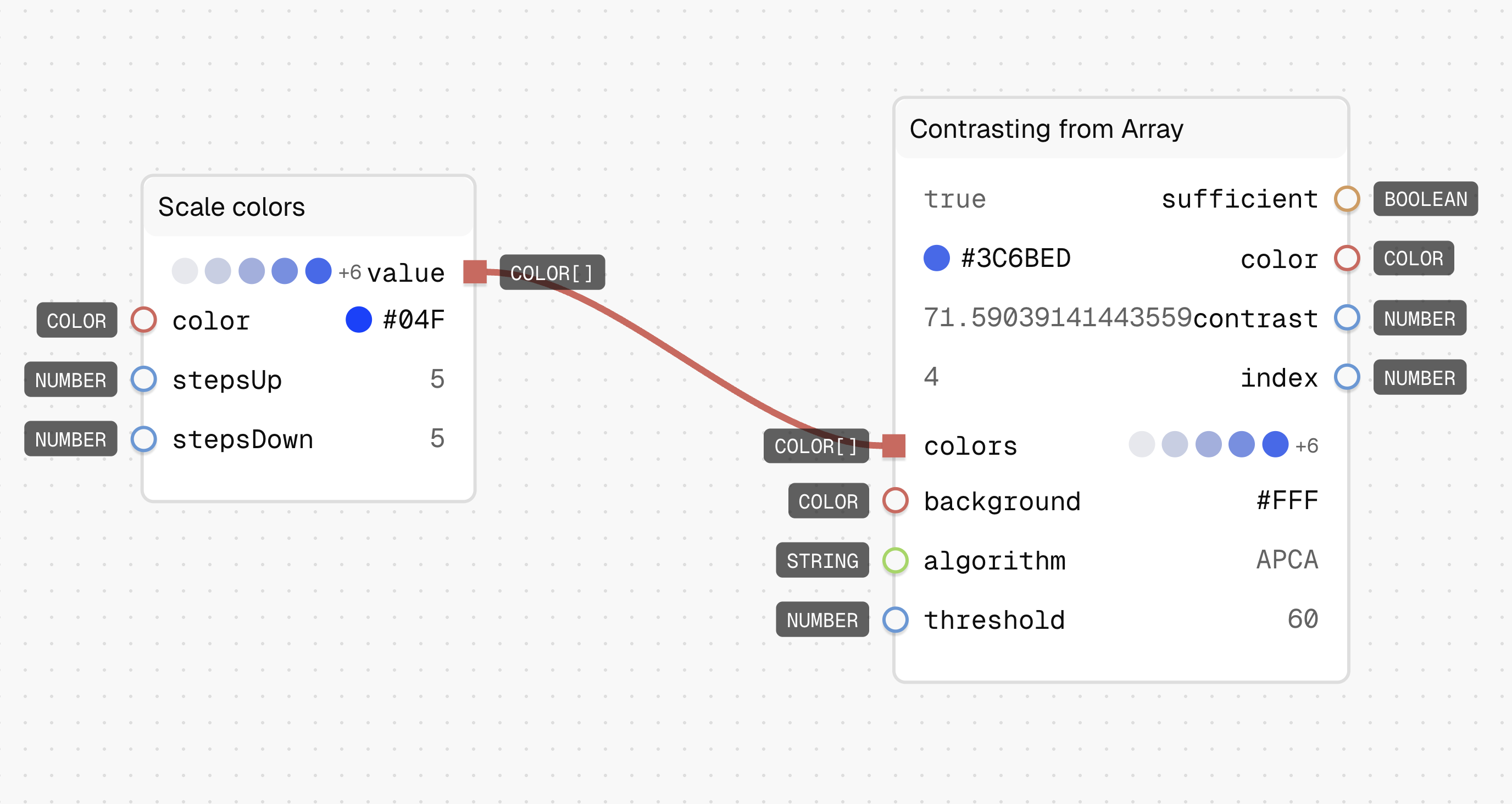
- Drag a Scale colors node and set the input color as
#0044FF - Connect the output of Scale colors node to the "Colors" input.
- Set the "Background" to the surface color where the colors will appear. Default is set as
#FFFFFF - Adjust the "Threshold" to your desired minimum contrast level. Default is set as 60.
- Select the "Algorithm" method. Default is APCA.
- The node outputs the first color that meets the threshold, or the one with highest contrast.
- The output "Color" is
#3C6BED("Index" of 4 in the input array) because it gives a "Contrast" of 71.59 which is more than the "Threshold" value of 60.
Tips
- Arrange your colors array with preferred options first, as the node returns the first sufficient color.
- The index output is useful for tracking which color was selected from the array.
See Also
- Contrasting Color: For choosing between two specific colors.
- Contrast: For calculating the contrast ratio between colors.
- Sort Colors By Distance: For ordering colors by their contrast.
Use Cases
- Theme Color Selection: Find an appropriate color from a theme palette for a specific background.
- Text Color Optimization: Automatically select the most readable text color from a set of brand options.
- Accessible UI Components: Choose colors that meet accessibility requirements from a predefined set.